IRA Biotech
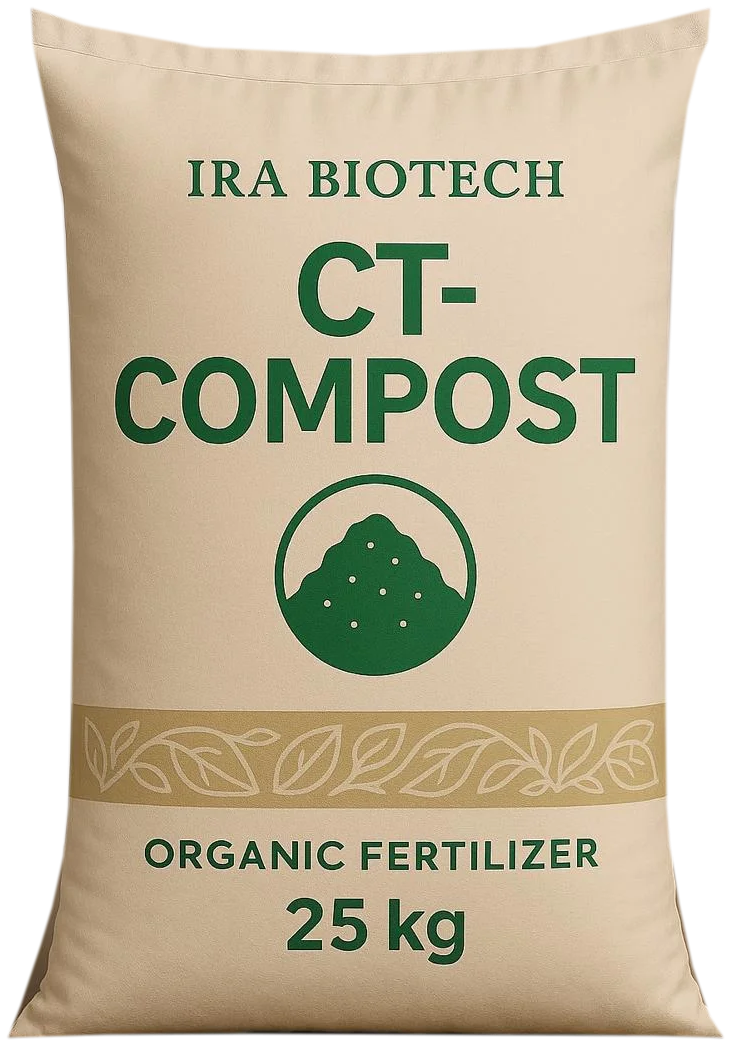
City Compost is a scientifically processed municipal organic waste compost, converted into a safe, stable, and nutrient-rich manure. It is further enriched with select lifelized microbes chosen specifically for phosphorus release, potassium mobilization, and rapid organic matter breakdown.
City Compost – Urban Organic Manure (25 KG)
Tagline
Cost-effective, microbially enriched compost from processed city organic waste.
Product Overview
This product is ideal for large-scale farming, landscaping, public gardens, parks, and urban/peri-urban agriculture.
Microbial Consortia in City Compost
- Compared to PROM, City Compost is more focused on decomposition and P–K availability:
- Phosphorus-solubilizing bacteria (PSB)
- Unlock fixed and insoluble phosphates typically present in urban compost substrates.
- Potassium-mobilizing bacteria
- Help make non-exchangeable potassium available in soils with city compost application.
- Actinomycetes (cellulolytic and ligninolytic strains)
- Highly efficient in breaking down woody, fibrous, and municipal organic residues and improving compost quality.
- Trichoderma viride
- Supports suppression of certain soil-borne pathogens and improves root health.
- A smaller but supportive background presence of: Nitrogen-fixing bacteria (helpful in soils with low native N).
- The microbes are lifelized, ensuring long shelf life and quick activation when the product is applied and watered.
Recommended Uses
- Field crops (broadacre)
- Vegetables
- Fruit orchards
- Lawns, landscapes, parks
- Avenue plantations
- Organic conversion programs
Dosage & Application
- Standard agricultural dose: 25 kg per acre as basal manure.
Field Crops (Paddy, Wheat, Pulses, Oilseeds, Millets)
- Apply 25 kg/acre of City Compost during main land preparation, along with regular FYM if used.
- Incorporate into soil for best contact with microbes and organic matter.
Vegetables (Open Field)
- 25 kg/acre before bed formation.
- For nurseries: 10–15% City Compost in nursery beds or trays.
Orchards & Fruit Trees
- 2–3 kg per young tree, 3–4 kg per mature tree, mixed in the basin area soil.
- Ideal before monsoon and/or before flowering.
Lawns, Gardens & Landscapes
- 2 kg per sq. metre as a top dressing, lightly raked in and watered.
- For new lawn establishment, mix compost into top layer of soil before sowing turf grass.
- Avenue Trees & Roadside Plantations
- 5–2 kg per planting pit, mixed well with soil before planting.
Key Benefits of City Compost
- Economical organic manure with microbial enrichment.
- Improves structure, porosity, and moisture retention of soils.
- Enhances P and K availability in soils receiving city compost.
- Aids in recycling city biomass into agriculture in a safe way.
- Supports urban organic farming, landscaping, and green belts.